Aura
Learning with consistency and community
Organization
Product @ UCI
Role
Product Designer
Timeline
January 2026 - April 20226
Leading the Design
When learning new skills, users struggle to stay consistent with their journeys. Gen Z often sources learning content through social media platforms but there is no structure in place to maximize retention and gauge progress.
01
Research
Connected with users to understand how we could translate pain points into guiding artifacts and flows
02
Design
Led the core design workflow of my cross-functional team, translating accumulated data into personalized components.
03
Testing
Iterated upon designs through usability testing strategies, modifying flows to better reflect stakeholder considerations.
How might we help Gen Z transform their skill curiosity into consistent growth, a sense of identity, and learning worth sharing?
Quantifying the Problem
76%
of Gen Z want more opportunities to learn new skills
88%
of Gen Z report using social media as a method of socializing weekly
When learning new skills, users struggle to stay consistent with their journeys. Gen Z often sources learning content through social media platforms but there is no structure in place to maximize retention and gauge progress.
Speaking to Users
Hearing out a range of users’ perspectives allowed our team to more concretely ideate a resonant solution to the problem. In doing so, we conducted 8 interviews that helped establish our direction.
Intangible Progress
“If you take gaps in between, especially early on, [those long gaps make you feel] like you'll forget the skills.”
Lack of Tangible Progress
"If there were smaller milestones I could reach and tangibly have something to show for it, it would make me more willing to [keep going]."
No Accountability Structure
"TikTok is easy to ‘doomscroll’ and say you'll try it — and you never do."
Lack of Community
"[I'd want] a community of people doing the same thing — a mix of people doing the same skills as well as your friends."
Building the Features
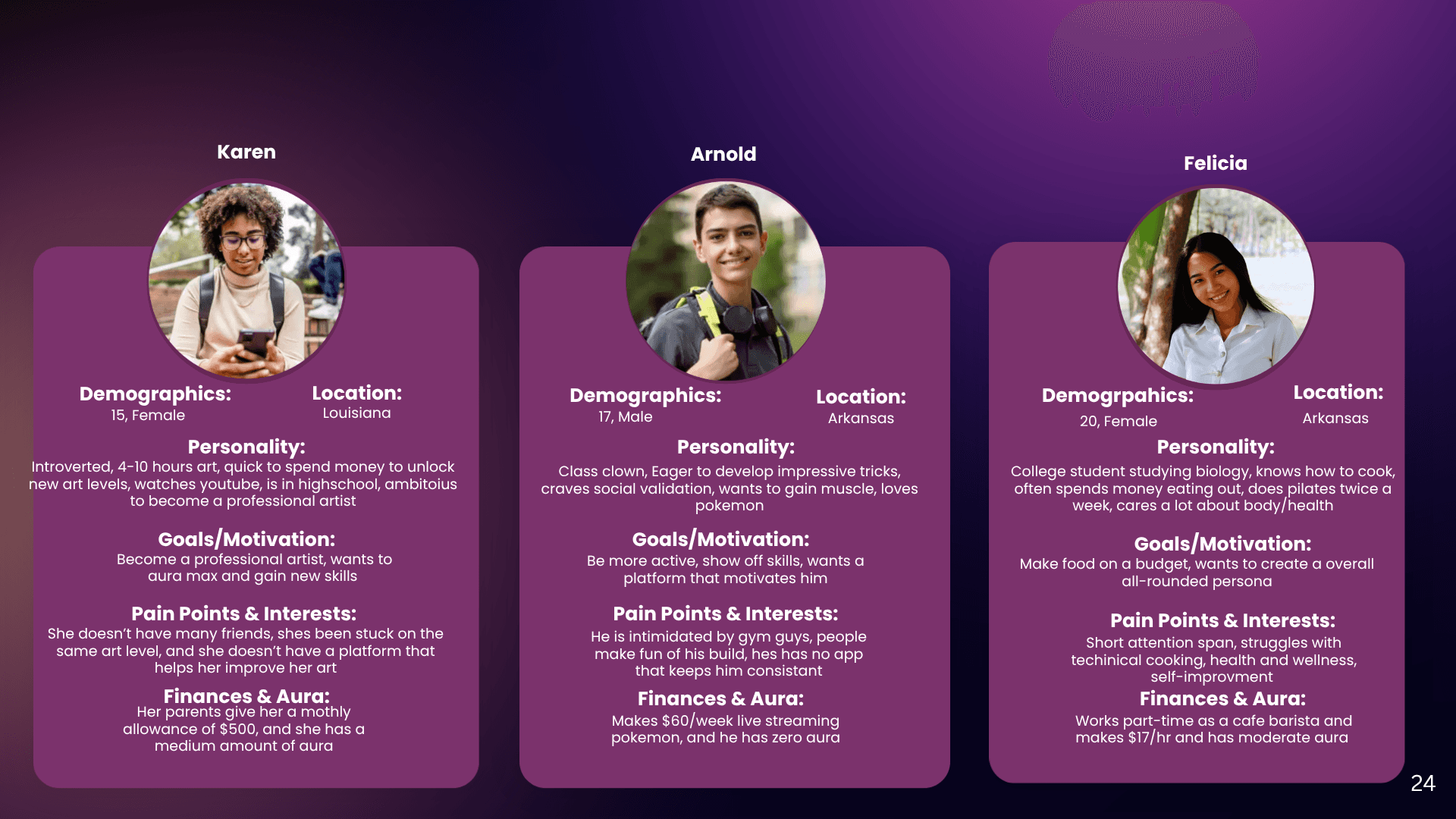
Based on the research conducted, I ideated critical features all dedicated towards personalizing the experience towards users’ needs.
Personalized Onboarding
Users experiences are tailored towards the learning objectives and style.

Modular Progression
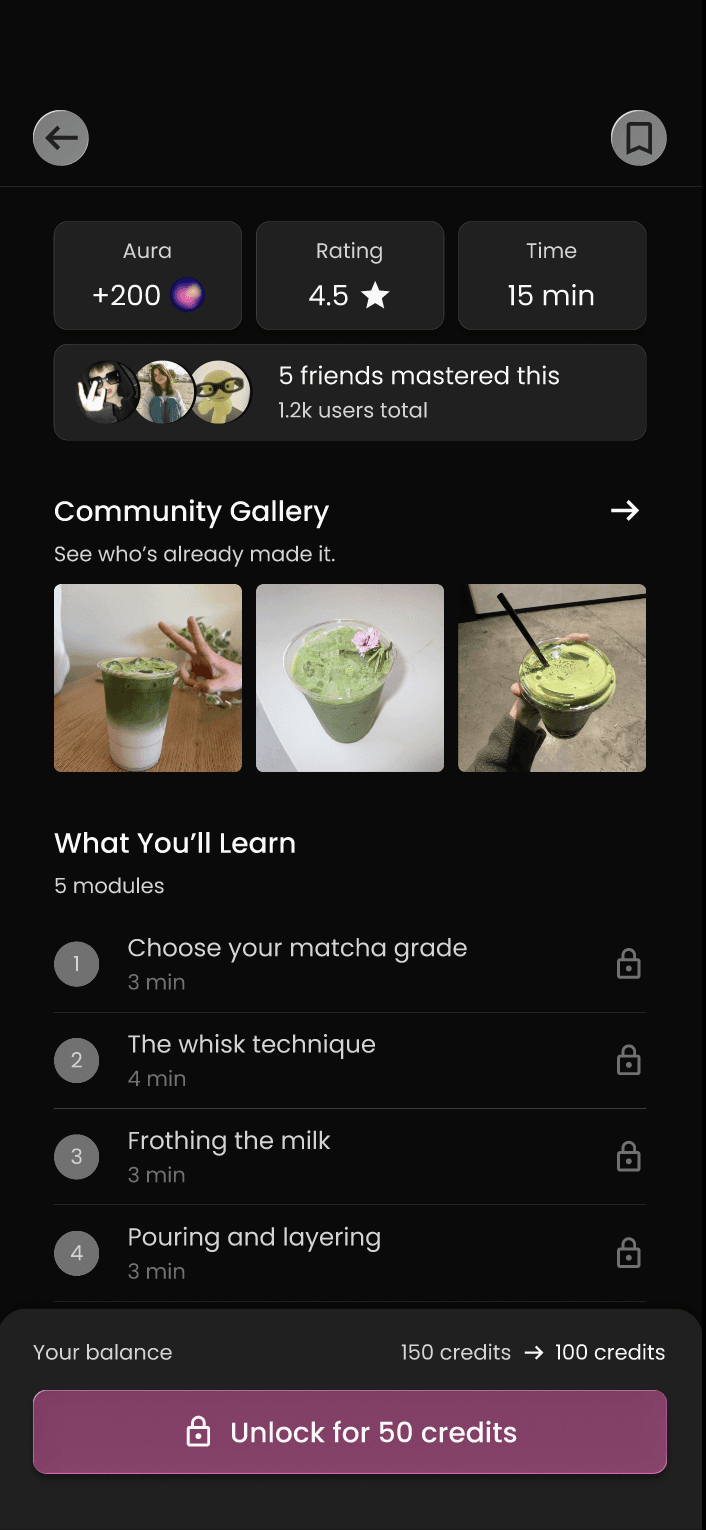
Each skills is broken down into a series of time-estimated, digestible modules easy to jump right back into.
Aura Point System
Users journey’s are tracked via an Aura Point system, which quantifies growth and guides personalized interaces.
Social Accountability
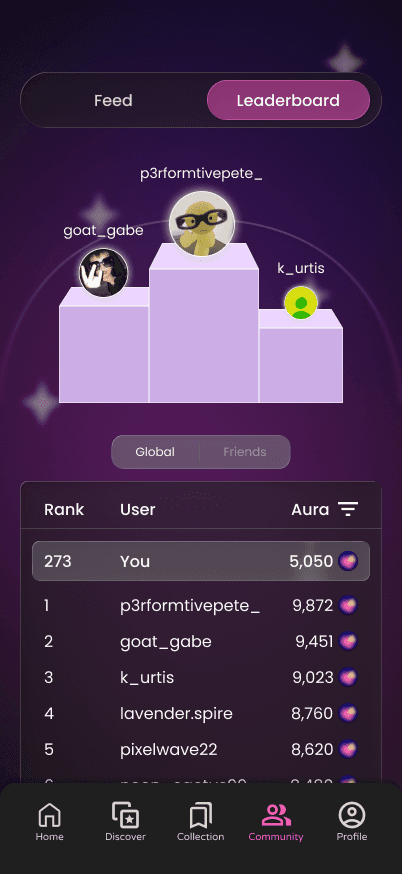
Other users’ experiences are embedded across every screen, including social feeds and leaderboard systems.
Recognizing Flaws
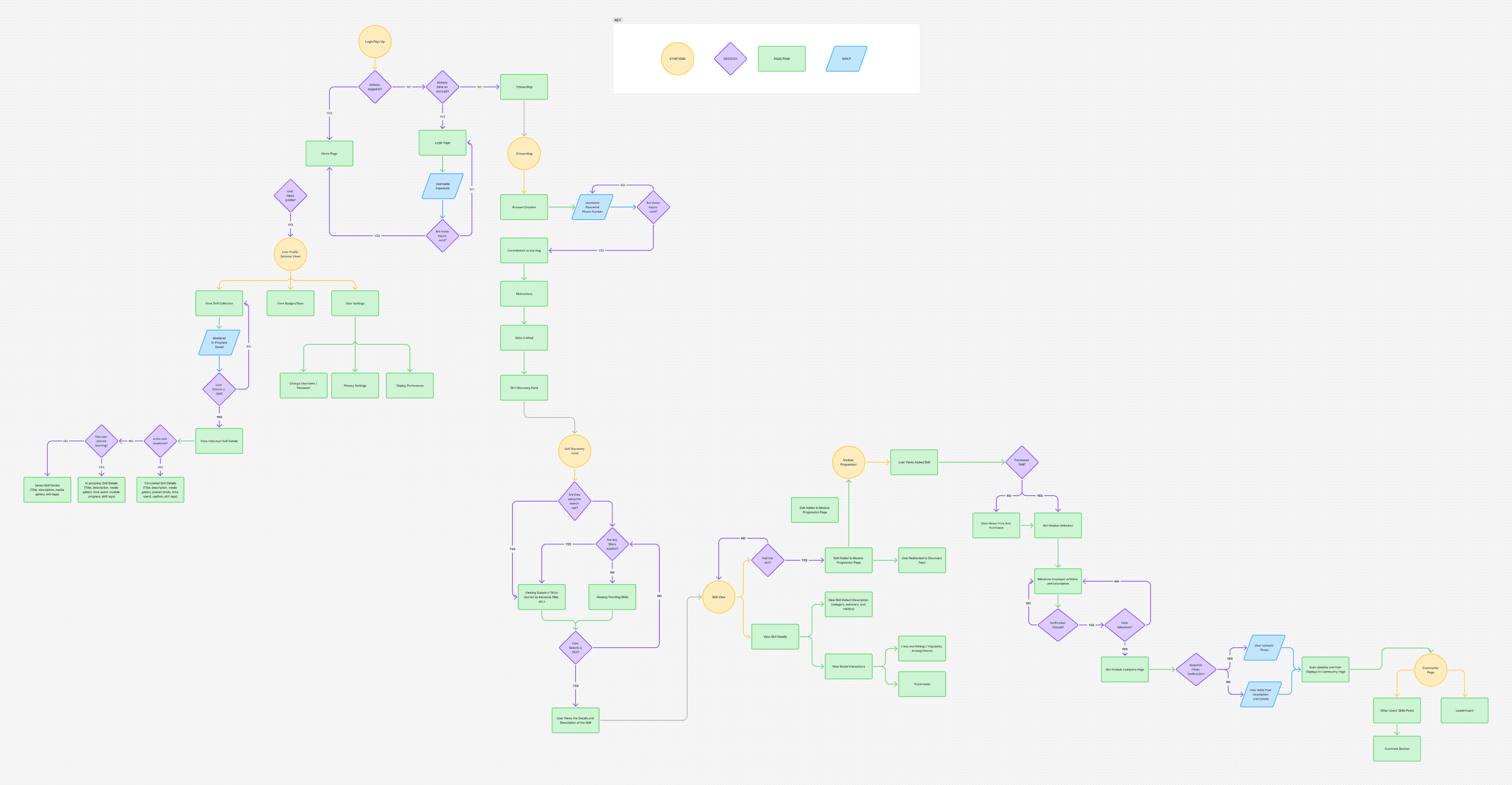
Despite the user flows we mapped out in response to the research conducted, as we began to actually build out the design, a sense of coherence was missing. By conducting usability testing sessions, I was able to recognize users’ struggles and learn how to adjust accordingly.
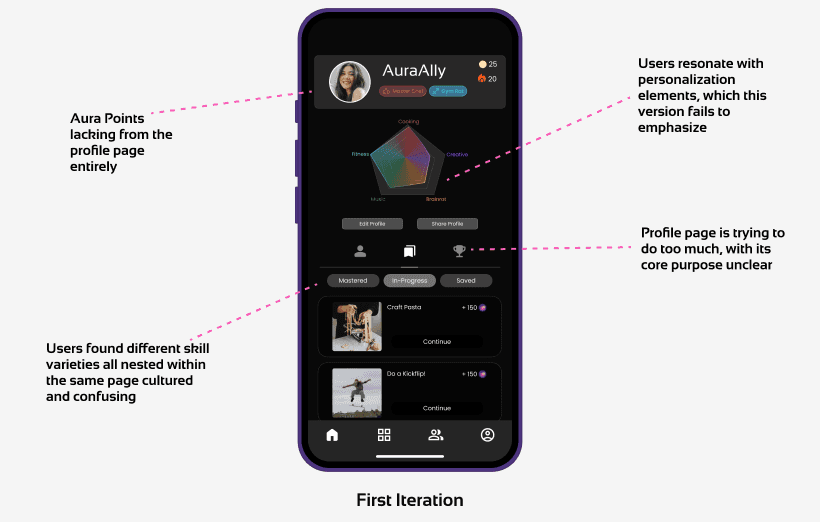
As we iterated upon our design, I completely restructured the profile page, offloading the skill organization sub-menus to a new page while ensuring the profile page has a more centralized indicator of identity.
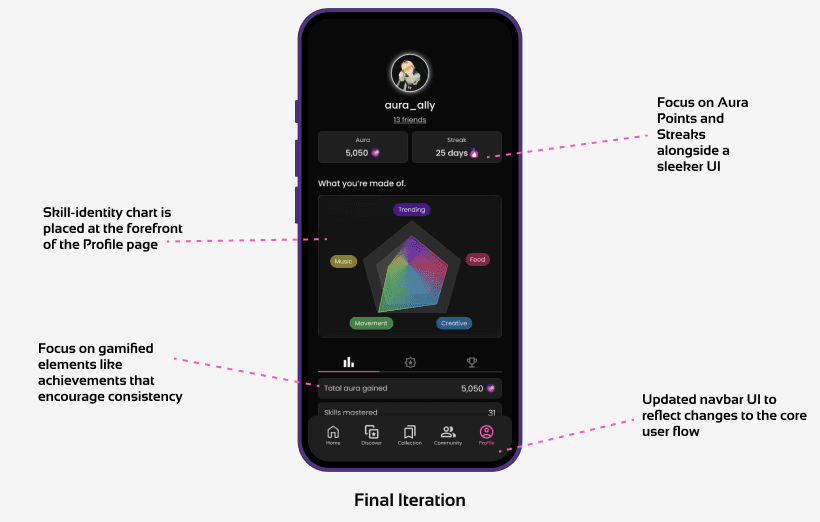
Defining Core Features
By integrating a leaderboard page, our team emphasized the community driven angle of our implementation, which was cited consistently by users as a meaningful avenue for building retentive behavior.
For every skill, a modular progression format is provided to the user before they even begin, making clear what exactly it is they are getting themselves into and how much time they can commit to each step, encouraging a pick-up-and-play style of use.